
Ultherapy is generally the better fit for deeper lifting of the lower face, neck, and décolletage, while Thermage is generally the better fit for surface tightening and larger areas. Your final choice depends on how much laxity you have, which area bothers you, how much discomfort you can tolerate, and your budget. A consultation with a licensed clinician confirms whether you are a good candidate.
TL;DR:
- Thermage is more commonly used for eyes, abdomen, thighs, and upper arms, while Ultherapy targets deeper support tissue in jowls, neck, and décolletage.
- Ultherapy often feels sharper and deeper than Thermage’s hot, snapping warmth; both usually cause temporary redness or tenderness and require little downtime.
- Both treatments suit mild to moderate laxity, but significant hanging skin may need surgical options; pregnancy, nursing, or implanted electronic devices require clinician review.
- Clinics may combine the devices for deeper sagging plus surface looseness, but sessions are usually spaced apart and add cost and another recovery window.
Table of Contents
- How Ultherapy works and when clinicians use it
- How Thermage works and when clinicians use it
- Key differences at a glance
- What the treatments feel like: pain, session length, and recovery
- Results, timeline, and how long effects last
- Who is a good candidate, and what to check first
- Can Ultherapy and Thermage be combined?
- How to choose: a short decision checklist
- Questions to ask at your consultation and factors that decide it
- Where TriPollar and in-clinic care fit in the mix
- Book a consultation and build your tightening plan
- FAQ
- Sources
How Ultherapy works and when clinicians use it
Ultherapy uses focused ultrasound, which means sound energy is concentrated at specific points below the skin surface. That energy heats deep tissue layers, including the deep dermis and the SMAS, the supportive layer that sits beneath the skin and influences how the lower face holds its shape. The heat prompts the body to build new collagen over time.
Clinicians typically reach for Ultherapy when the concern is sagging that sits deeper than the skin’s surface. A typical visit looks like this:
- Target areas: lower face, brow, chin, neck, and décolletage.
- Setup: a clinician applies gel, then uses ultrasound imaging to place the transducer on the right depth and area.
- Energy delivery: short bursts of energy are delivered in lines across the treatment zone, and session length varies with how many areas are treated.
- Immediate reactions: redness and tenderness are common and usually settle within hours to days.
Because Ultherapy aims below the surface, it is most often discussed for jowls, a softening jawline, and a lax neck. Skin that is loose on the surface, with fine creepiness, may call for a different approach, which is where the next technology comes in.
How Thermage works and when clinicians use it
Thermage uses radiofrequency, an electrical energy that heats tissue through resistance rather than through sound. The heat is delivered through a handpiece that touches the skin and warms the dermis, the layer responsible for firmness and texture. That warming contracts existing collagen fibers right away and encourages new collagen to form over time.
Clinicians use Thermage on the face and around the eyes, and it is also widely used on larger body areas where skin has loosened:
- Face and eye area: helpful for general tightening and early to moderate laxity.
- Body areas: abdomen, thighs, and upper arms are common targets because the handpieces cover wider zones.
- What you feel: short pulses of heat, often described as a brief, intense warmth, with cooling built into many devices to protect the surface.
- Session length: ranges from under an hour for smaller zones to longer for large body areas.
- Recovery: mild redness or swelling can appear and typically fades quickly, so most people return to normal activity soon.
Thermage works closer to the surface than Ultherapy, which suits tightening and smoothing more than deep lifting.
Key differences at a glance
The core difference is the energy source. Ultrasound reaches deeper and is delivered at precise focal points, so it suits lifting. Radiofrequency heats more broadly at shallower depths, so it suits tightening and texture, especially across larger areas.
- Jowls and neck: Ultherapy is usually the first choice because the target tissue sits deeper.
- Chest and décolletage: Ultherapy is commonly used here for lift, while radiofrequency can help with surface crepiness.
- Abdomen, thighs, arms: Thermage is the more common choice for these larger zones.
- Procedure time and comfort: both vary by area. Ultherapy is often described as the more intense of the two because of the deep, focused energy, so clinics may offer topical numbing, breaks, or oral pain relief. Thermage is usually described as hot but tolerable.
- Downtime and side effects: both involve little downtime. Temporary redness, swelling, and tenderness are the usual reactions.
- Cost and sessions: pricing depends on the area, the provider, and how many sessions are recommended, so ask for a written quote at your consultation.
- Results timeline: Ultherapy and Thermage results typically build gradually, with some immediate tightening possible.
No device is a surgical facelift. Both are built for mild to moderate laxity, and expectations should match that.
What the treatments feel like: pain, session length, and recovery
Knowing what to expect makes either appointment easier. Most visits follow the same arc, and a little preparation goes a long way.
- Consultation and marking: the clinician reviews your goals, checks for contraindications, and maps the treatment zones.
- Cleansing and numbing: the skin is cleaned, and a topical anesthetic may be applied if your provider uses one.
- Energy delivery: you feel heat or deep, focused pulses depending on the device, and the clinician adjusts settings to keep you comfortable.
- Finish and aftercare: the area is cleaned, and you receive instructions for the rest of the day.
Patients commonly describe Ultherapy as sharper and deeper, and Thermage as a hot, snapping warmth. Providers manage discomfort with topical anesthetic, pauses, and sometimes oral analgesia. Session length depends on the area: a smaller zone can take less time than a full face and neck treatment takes.
Downtime is minimal for most people. Redness and tenderness settle over time, and gentle skincare and sun protection afterward help the skin recover.
Pro Tip: Arrive with clean, makeup-free skin, eat beforehand, and ask your provider about numbing and pain relief options before the day of treatment so you are not deciding under pressure.
Results, timeline, and how long effects last
Neither treatment is instant, because both rely on your body building new collagen. With Ultherapy, visible improvement develops gradually, and some people see further change over time. With Thermage, tightening arrives gradually, with a first effect sometimes noticed sooner.
How long results last depends on your age, skin quality, the area treated, and lifestyle factors, so any single timeline is an estimate. Some people have a single treatment, while others plan repeat sessions or maintenance visits to keep the effect going.
There is also direct comparative research. A randomized split-face pilot registered as NCT01713985 compared Ulthera and Thermage on the face and neck, with follow-up at 90 and 180 days and outcomes that included photographic assessments and patient satisfaction questionnaires. It is a small feasibility study, so it shows how a head-to-head comparison is designed rather than settling which device is better for everyone.
Who is a good candidate, and what to check first
Matching your concern to the technology is the most useful step you can take before booking.
- Ultherapy: a good fit for mild to moderate laxity in the deeper layers of the lower face, neck, and décolletage, such as early jowls.
- Thermage: a good fit for surface tightening and larger zones, including the eye area and body areas where skin has loosened.
- Severe laxity: if skin hangs significantly, noninvasive devices may not deliver the change you want, and surgical options may be more appropriate to discuss.
- Contraindications to raise: pregnancy or nursing, and implanted electronic devices such as pacemakers or ICDs, are common reasons a clinician will pause or decline treatment.
- Individual assessment: only an in-person exam can confirm your candidacy, so bring your full medical history.
Please consult a licensed clinician before any energy-based treatment, especially if you have a medical device, a health condition, or take medication that affects healing.
Can Ultherapy and Thermage be combined?
Yes, some clinics layer the two because they work at different depths. Ultrasound targets deep tissue for lift, and radiofrequency warms shallower tissue for tightening, so the effects can be complementary.
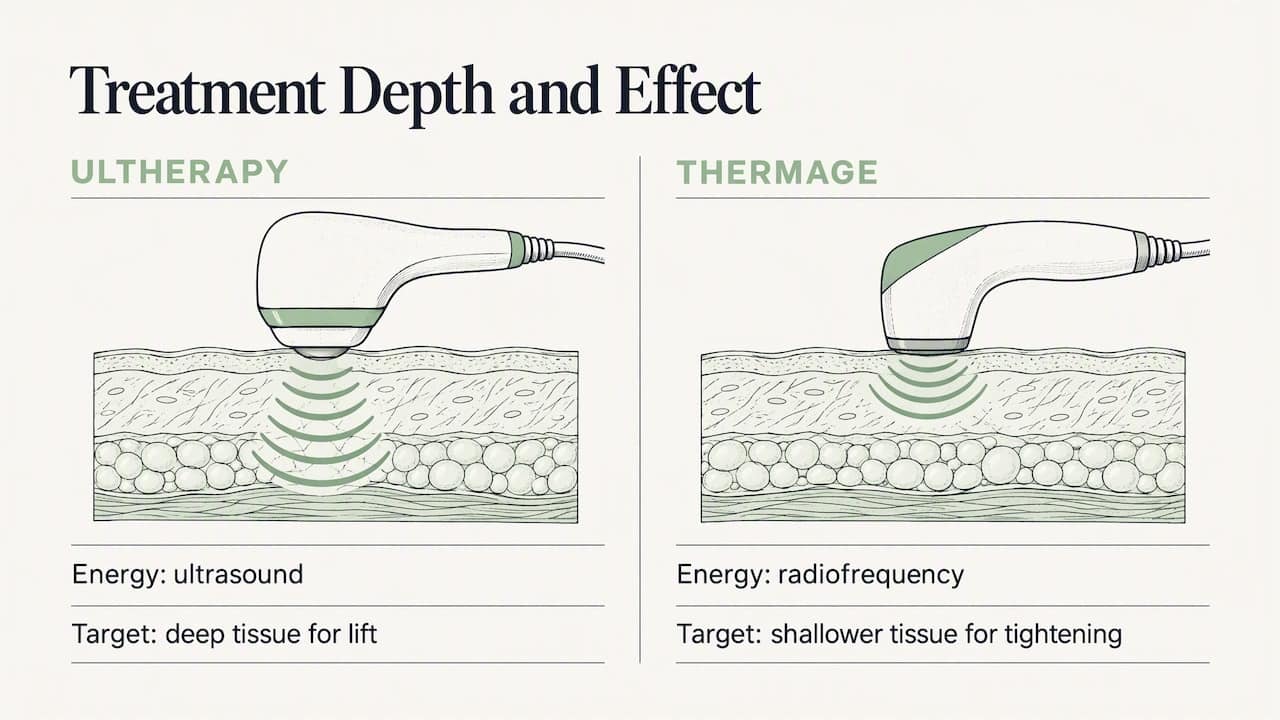
When treatments are combined, providers usually space them apart rather than doing both in one visit, and the exact interval depends on the clinic and your skin. A layered plan tends to suit people who have both deeper sagging and surface looseness. If your main concern is one or the other, a single modality may be enough. Combining also adds cost and a second recovery window, so weigh that against the extra benefit with your provider.
How to choose: a short decision checklist
Use this list during your consultation so you leave with a clear answer.
- Name your primary area and whether you want lift or surface tightening.
- Ask which device model the clinic uses and how much experience the provider has with it.
- Discuss pain management and how many sessions your plan involves.
- Review before and after photos of patients with concerns similar to yours.
- Ask what follow-up, maintenance, and aftercare look like, including professional home care.
If you are still weighing options, our skin tightening treatments page explains how a clinic-based plan can fit alongside the decision you are making.
Questions to ask at your consultation and factors that decide it
A good consultation is a two-way conversation, and the questions you bring shape how useful it is. Start with your goals: describe exactly what you see in the mirror, whether that is a softening jawline, a lax neck, or crepey skin, and ask the clinician to tell you honestly whether a noninvasive device can address it.
Then ask about the evidence behind the recommendation. What results do patients with similar skin typically see, and over what timeline? How many sessions are realistic, and what happens if the first result is modest? Ask to see unedited photographs taken under consistent lighting.
Next, cover safety and comfort. Which contraindications apply to you? What numbing or pain relief is offered? What reactions are normal, and which ones should prompt a call?
Finally, talk logistics and cost. Request a written quote that lists the area, the number of sessions, and any maintenance visits. Ask how soon you can return to work, exercise, and sun exposure.
The decision factors that matter most are the depth of your concern, the size of the area, your comfort threshold, your timeline, and your budget. When those are clear, the choice between lift and tightening usually becomes straightforward. If a provider cannot explain why one device fits your concern better than the other, keep asking until the reasoning makes sense to you.

Where TriPollar and in-clinic care fit in the mix
Many people searching this comparison simply want a safe, effective way to firm their skin without surgery, and the device name matters less than the result. We offer TriPollar® Lift treatments for the full face, and TriPollar Ultra Lift for the face and neck, delivered in a private setting with Health Canada licensed devices. We also offer micro-needling and OxyGeneo facials that complement tightening, and every plan begins with a personalized consultation so the approach fits your skin and your goals.
— Andy
Book a consultation and build your tightening plan
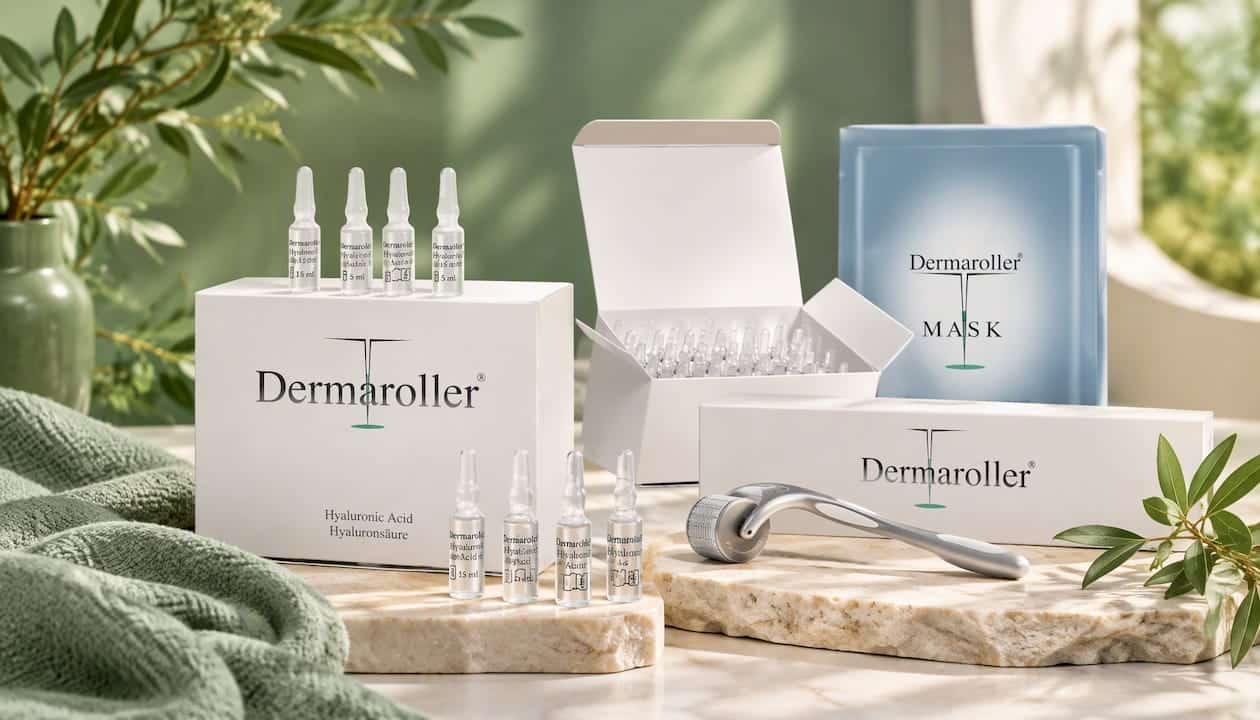
Book a consultation with us and we will review your goals, your skin, and the options that fit, then lay out a personalized plan. For tightening, start with our TriPollar® treatments or our micro-needling service. For home care between visits, explore the Ultimate Dermaroller® Home Care Set, the Dermaroller® Hyaluronic Acid Ampules, and the Dermaroller® Roller.
This article is general information, not a substitute for advice from a qualified doctor. Consult a qualified healthcare professional about your own circumstances before acting on anything here.
FAQ
Is Ultherapy or Thermage better for jowls?
Ultherapy is usually the first option clinicians consider for jowls because its focused ultrasound reaches the deeper tissue that supports the lower face. Thermage can still help with surface tightening in the same area. A consultation shows which fits your degree of laxity.
How painful is Thermage compared with Ultherapy?
Thermage is typically described as a brief, intense warmth, while Ultherapy is often described as a deeper, sharper sensation. Both are manageable for most people, and providers can use topical anesthetic and short breaks to keep you comfortable.
Can I have both Ultherapy and Thermage?
Yes, some clinics combine them because they work at different depths, which can complement each other. Sessions are usually spaced apart, and your provider decides the timing based on your skin and goals.
How soon will I see results from skin tightening?
Results build gradually as your body produces new collagen. Many people notice change, with continued improvement over time, though timing varies by person and area.
