
Pores can’t be permanently shrunk, but they can be made to look much smaller. The best enlarged pores treatment keeps them clear of oil and debris, then rebuilds the collagen and elastin around them. That usually means a steady home routine plus, for stubborn cases, a professional treatment such as microneedling, a chemical peel or an oxygen-based facial.
This guide covers why pores look large, what you can do at home, which in-clinic treatments make sense, and how to choose between them. We are an Ottawa spa, so we also say where our own treatments fit and where they don’t.
TL;DR
- Pore size is largely genetic. Dermatologists say pores can’t be shrunk permanently, but their appearance can be reduced.
- Start with gentle twice-daily cleansing, non-comedogenic products and a daily SPF 30+ sunscreen. Skip squeezing and harsh scrubbing.
- Professional microneedling reaches depths that home rollers can’t, so it is the stronger option for pores linked to texture and lost firmness.
- Chemical peels and similar exfoliating treatments suit oily, congested pores. Skin tightening suits pores that look larger because skin has lost support.
- A consultation matters more than the device. The right treatment depends on why your pores look large.
Table of Contents
- What actually makes pores look large
- Start at home: the routine that does the most work
- Professional treatments for enlarged pores
- How to choose the right treatment
- What to expect from results
- Our perspective: why we treat pores as a skin-health question
- Book an assessment in Ottawa
- Aftercare that protects your results
- Common myths about pores
- FAQ
- Sources
What actually makes pores look large
A pore is an opening that lets sweat and oil reach the skin’s surface. Genetics mostly determines how big yours are. If your parents have visible pores, you probably will too.
Genetics is only part of the story. DermNet lists several factors that can make pores more noticeable: increased sebum production, larger hair follicles, comedogenic products, loss of skin elasticity with age and sun damage. Acne is also associated with enlarged pores.
A clinical review of treatment options groups the causes in a similar way: more oil, skin aging with laxity and reduced elasticity, and larger follicles. This matters because each cause needs a different approach.
| Why pores look large | What you typically see | Approach that makes sense |
|---|---|---|
| Oil and clogging | Shiny T-zone, blackheads, bumpy texture | Cleansing, exfoliating acids, peels |
| Loss of support (aging, sun) | Pores that look stretched, fine lines, less firmness | Collagen-building treatments, tightening, sun protection |
| Past acne | Pores with uneven texture or scarring | Microneedling, resurfacing, a plan with your clinician |
| Genetics | Visible pores that have always been there | Realistic expectations and steady maintenance |
Most people are a mix of two or three rows. That is why a one-product fix rarely works.
Start at home: the routine that does the most work
Before booking anything, get the basics right. They cost little and every professional treatment works better on skin that is well cared for.
Cleanse gently, twice a day
As Vancouver dermatologist Dr. Marcie Ulmer explains for Acne Action, the Acne and Rosacea Society of Canada, the first step is regular cleansing twice daily. It removes debris, dead skin cells and excess oil. Harsh scrubbing does the opposite: it irritates the skin and causes inflammation.
Choose non-comedogenic products
The American Academy of Dermatology notes that non-comedogenic products won’t clog pores, and that clogged pores expand and look more noticeable. Check labels on moisturizer, sunscreen and makeup.
Wear sunscreen every day
This is the step people resist, usually because they fear sunscreen clogs pores. Cleveland Clinic experts point out that a non-comedogenic sunscreen protects the structures that keep pores looking tight. The AAD recommends a broad-spectrum, water-resistant sunscreen of SPF 30 or higher, because UV damage breaks down collagen and elastin. In Ottawa that applies in January as well as July, since snow reflects UV and winter sun still adds up.
Use exfoliating acids and retinoids with care
Glycolic and salicylic acids and retinol are the usual over-the-counter tools for promoting skin renewal. Introduce one at a time and build up slowly. If your skin stings, flakes or turns red, step back. Irritated skin looks worse, not better. If you have rosacea, very sensitive skin or an active acne flare, ask a dermatologist or your family doctor before layering actives.
If you buy retinol products, know that Health Canada has revised the maximum permitted concentrations of retinol and its esters in certain products in its Cosmetic Ingredient Hotlist. Buying from reputable Canadian retailers keeps you within those rules.
Don’t squeeze, and don’t over-extract
Squeezing or using extraction tools at home doesn’t shrink pores. It often causes inflammation, scarring and tissue damage that make pores look more prominent over time. If you have blackheads that bother you, have a professional deal with them.
Professional treatments for enlarged pores
A 2016 update on enlarged facial pores describes the condition as hard to treat because its causes are multifactorial. That is also why you will see many different treatments recommended. Here is how the main ones work and who they suit.
Microneedling (collagen induction therapy)
Microneedling uses fine needles to make controlled micro-injuries in the skin. The skin responds by producing new collagen, and more collagen means more support around each pore. Cleveland Clinic notes that professional microneedling at 1.5 to 2 mm can trigger the collagen production needed to support pores, while at-home rollers typically reach only 0.5 mm or less. They can’t deliver the same structural result.
That makes microneedling a good fit if your pores look large alongside fine lines, uneven texture or old acne marks. It is also the answer to a common question: yes, microneedling can help with pores and with fine lines, because both respond to better collagen support. It won’t change your genetics, and results build over a course of sessions rather than appearing overnight.
At Nakota MediSpa, collagen induction therapy and micro-needling is 350 CAD per treatment. If you are unsure which approach fits your skin, our page on how to select your micro-needling treatment walks through the options, and here is how the dermaroller works.
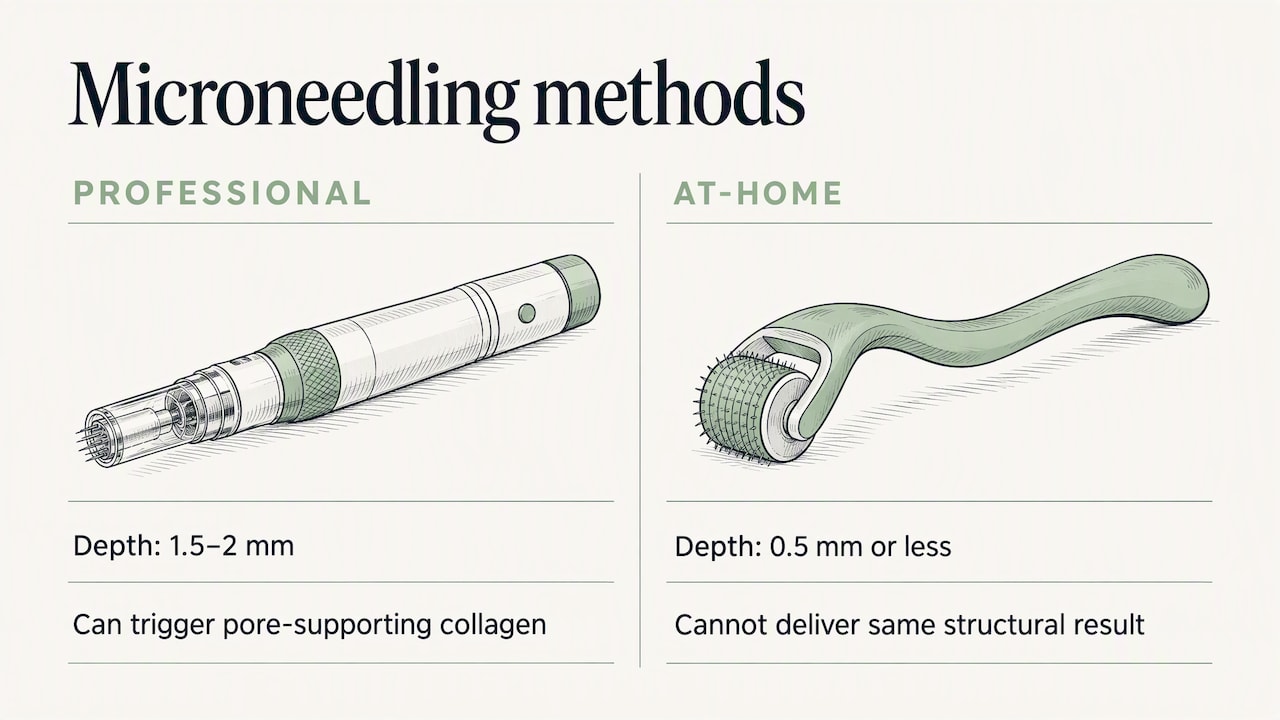
Chemical peels
Peels use acids to loosen the top layer of dead skin and clear out the pore lining. The AAD lists chemical peels among treatments that can have a visible effect on pores, and a peel is often the first choice for oily, congested skin where blackheads and clogging drive the problem. Peels do less for pores that look large because skin has lost firmness, so they are often paired with a collagen-building treatment.
We offer the Noon chemical peel treatment. Its price isn’t published, so ask us when you book.
Oxygen-based facials
An OxyGeneo facial combines exfoliation, oxygenation and infusion of active ingredients in one session. For pores, the appeal is that it clears surface debris and brightens skin without the downtime of stronger resurfacing. It is a sensible starting point if you want a visible improvement before an event, or you are new to professional treatments. Read more in our guide to OxyGeneo facials in Ottawa, or see the OxyGeneo 3-in-1 Super Facial page. The facial’s price isn’t published; the back facial starts from 185 CAD.
Radiofrequency skin tightening
When pores look larger because the skin around them has loosened, tightening treatments address the cause rather than the symptom. TriPollar uses radiofrequency energy to heat the deeper layers of the skin, which supports firmness. Our TriPollar skin tightening prices are:
- TriPollar Lift, full face: 225 CAD
- TriPollar Ultra Lift, face and neck: 275 CAD
- TriPollar eye-under treatment or eyebrow lift: 100 CAD
Lasers and other options
Laser resurfacing and similar energy-based devices are also used for pores, usually in dermatology and medical clinics. They can be effective for some people but typically cost more and may involve more downtime. We don’t offer lasers, so if you want that route, ask your family doctor for a referral to a dermatologist.
How to choose the right treatment
A short checklist helps more than a long list of options.
- Look at your skin in daylight. Are the pores mostly clogged and shiny, or stretched with fine lines around them?
- Think about downtime. Facials and peels are gentler than microneedling in the days after, and microneedling can leave temporary redness. Plan around events.
- Decide how much effort you will put in. Treatments work best with sunscreen and a consistent routine in between.
- Set the right goal. The aim is smoother, more refined skin, not pores that vanish.
- Book a consultation first. A good practitioner asks about your history, products, medications and skin conditions before suggesting anything.
Which treatment for which situation
| Your situation | Good first step |
|---|---|
| Oily skin, blackheads, dull texture | Chemical peel or OxyGeneo facial |
| Pores plus fine lines and early laxity | Micro-needling, with or without tightening |
| Visible pores after past acne | Micro-needling over a course of sessions |
| Loose skin on cheeks and jawline | TriPollar skin tightening |
| Mild concerns, want an easy start | OxyGeneo facial |
This table is a starting point. If you have active acne, a skin condition, are pregnant or take medication that affects your skin, tell your practitioner and check with your doctor or dermatologist before any procedure.
What to expect from results
Set realistic expectations. Pores will look smaller, skin will look smoother and makeup will sit better, but pores don’t disappear. Dermatologists describe the aim as consistent, gentle management rather than a one-time fix.
Expect most collagen-based treatments to need a series of sessions, spaced by your practitioner, and maintenance afterward. Your results depend on your skin type, age, sun exposure and how well you follow aftercare. We won’t promise a specific percentage reduction, and you should be wary of any clinic that does.
Our perspective: why we treat pores as a skin-health question
We run Nakota MediSpa from a private, home-based space in Ottawa, and that shapes how we work. We have the time for a proper conversation before any device comes out. Pores are a good example of why that matters: two clients can ask for the same thing, and one needs clearing and exfoliation while the other needs support and collagen.
We use Health Canada licensed devices and natural-ingredient-focused protocols. We would rather recommend a simple peel, or even a better sunscreen habit, than sell a course of treatments that doesn’t match your skin. Immediate, visible improvement in texture is something clients often notice, but lasting change comes from the combination of treatment and home care.
Our advice is the same as the dermatology guidance above. Protect your skin from the sun, cleanse gently, leave your pores alone, and choose professional treatments for the cause you actually have.
— Andy
Book an assessment in Ottawa
If you want a plan built around your skin, we offer personalized treatments including micro-needling, TriPollar skin tightening, the OxyGeneo 3-in-1 facial and the Noon chemical peel. Visit nakotamedispa.com to get in touch and talk through which one suits your pores.
Aftercare that protects your results
Whatever treatment you choose, the days afterward decide how well it turns out.
- Use sunscreen daily and avoid prolonged sun exposure on freshly treated skin.
- Stick to gentle cleansers and non-comedogenic moisturizer until your practitioner says otherwise.
- Pause strong actives such as retinoids and exfoliating acids for as long as your practitioner advises.
- Don’t pick at flaking or peeling skin.
- Be careful with home dermarollers. Short needles can’t match professional depth, and poor hygiene or aggressive use risks irritation. Health Canada has warned about unauthorized microneedling devices, so only use products from a reputable source. Our home care system is designed to support in-clinic treatments.
Common myths about pores
“Pores open and close.” They don’t. They have no muscles. Steam or cold water can change how your skin feels, not the pore itself.
“Scrubbing harder cleans them better.” Harsh scrubbing irritates skin and can make pores more noticeable. Gentle, regular cleansing is the dermatologist-backed approach.
“Sunscreen clogs pores.” A non-comedogenic formula doesn’t, and skipping it speeds the collagen loss that makes pores look larger.
“A single treatment fixes pores permanently.” Pore size is largely genetic, so improvement comes from ongoing care.
FAQ
Can enlarged pores be shrunk permanently?
No. Genetics largely sets pore size, so dermatologists talk about minimizing their appearance rather than shrinking them. Keeping pores clear, protecting your skin from the sun and supporting collagen all make them look smaller, but you need to keep it up.
Does microneedling help with large pores and fine lines?
It can help with both, because it stimulates collagen that supports the skin around pores and softens fine lines. Professional treatment reaches deeper than home rollers, which is why in-clinic sessions give stronger results. Expect a series of treatments, not one.
Are chemical peels good for pores?
They are often a good choice when oil and clogging are the main issue, since they clear dead skin and debris. If your pores look larger because of aging or lost firmness, a peel works best alongside a collagen-building treatment. Your practitioner should assess your skin type first.
How much does professional pore treatment cost in Ottawa?
At Nakota MediSpa, micro-needling is 350 CAD per treatment, and TriPollar full face is 225 CAD. Peel and OxyGeneo facial prices aren’t published, so contact us for a quote. Prices elsewhere vary by provider and treatment.
What should I avoid doing to my pores at home?
Avoid squeezing, aggressive extraction tools and harsh scrubs, which cause inflammation and can lead to scarring. Also avoid skipping sunscreen. A gentle cleanser twice a day and a non-comedogenic sunscreen are the safest base.
Sources
- Acne Action: How to Minimize Facial Pores
- Cleveland Clinic: 7 Dermatologist Approved Tips to Shrink Your Pores
- American Academy of Dermatology: What can treat large facial pores?
- DermNet: Enlarged pores
- Treatment of enlarged facial pores
- Enlarged facial pores: an update on treatments (PubMed)
- Health Canada: Changes to the Cosmetic Ingredient Hotlist
- Health Canada warning on at-home microneedling devices (RefinedMD)
