Mesotherapy can help some people with thinning hair, but the evidence is limited and results vary, so most clinicians treat it as an adjunct rather than a guaranteed fix. A 2023 systematic review found promising signals alongside small randomized controlled trials, but a professional diagnosis still comes first. At Nakota MediSpa, we treat it as one tool among several, not a stand-alone cure.
TL;DR:
- A 2023 review covered 27 studies; one small trial found faster shaft diameter gains on some measures, while other outcomes showed no advantage over minoxidil.
- Consider treatment only after a clinician confirms early androgenetic alopecia or telogen effluvium and addresses reversible triggers; avoid it for active scarring alopecia.
- Before booking, request the complete ingredient list, allergy screening, sterility practices, written aftercare, and a plan to measure results with photos or trichoscopy.
- Initial sessions are usually spaced weeks apart, followed by maintenance every one to three months; redness or tenderness may last 24 to 48 hours.
- PRP showed more reliable density gains than mesotherapy in a comparison over six months; either approach requires maintenance, while mixed cocktails add allergy concerns.
Table of Contents
- What mesotherapy is and how it’s administered
- Clinical evidence: what the research actually shows
- Safety, side effects, and how to reduce your risk
- Who’s a good candidate for mesotherapy
- What to expect: sessions, downtime, and cost
- How mesotherapy compares with PRP and approved medications
- Our approach to mesotherapy at Nakota MediSpa
- Should you actually try mesotherapy?
- Ready to talk to a provider about mesotherapy
- FAQ
- Sources
What mesotherapy is and how it’s administered
Mesotherapy delivers active ingredients directly into the scalp’s dermal layer through intradermal microinjections, typically placed 2 to 4 millimeters deep where hair follicles sit. This bypasses the skin barrier that limits how much a topical product can actually reach the follicle.
Providers use a few different delivery methods depending on training and the area being treated:
- Manual injections with a fine needle and syringe, placed point by point across the scalp.
- Injector guns that automate needle depth and dosing for more even coverage.
- Microneedling-assisted delivery, where a device creates tiny channels that the solution is massaged into.
The injected cocktails vary widely by provider and goal. Common ingredients include vitamins and minerals (biotin, zinc, B-complex), hyaluronic acid for hydration, and peptides or growth factors meant to support follicle signaling. Some clinics add intradermal minoxidil or dutasteride, essentially delivering a drug already approved in topical or oral form through a different route. There is no single standardized formula, which is one reason results differ so much from clinic to clinic.
Clinical evidence: what the research actually shows
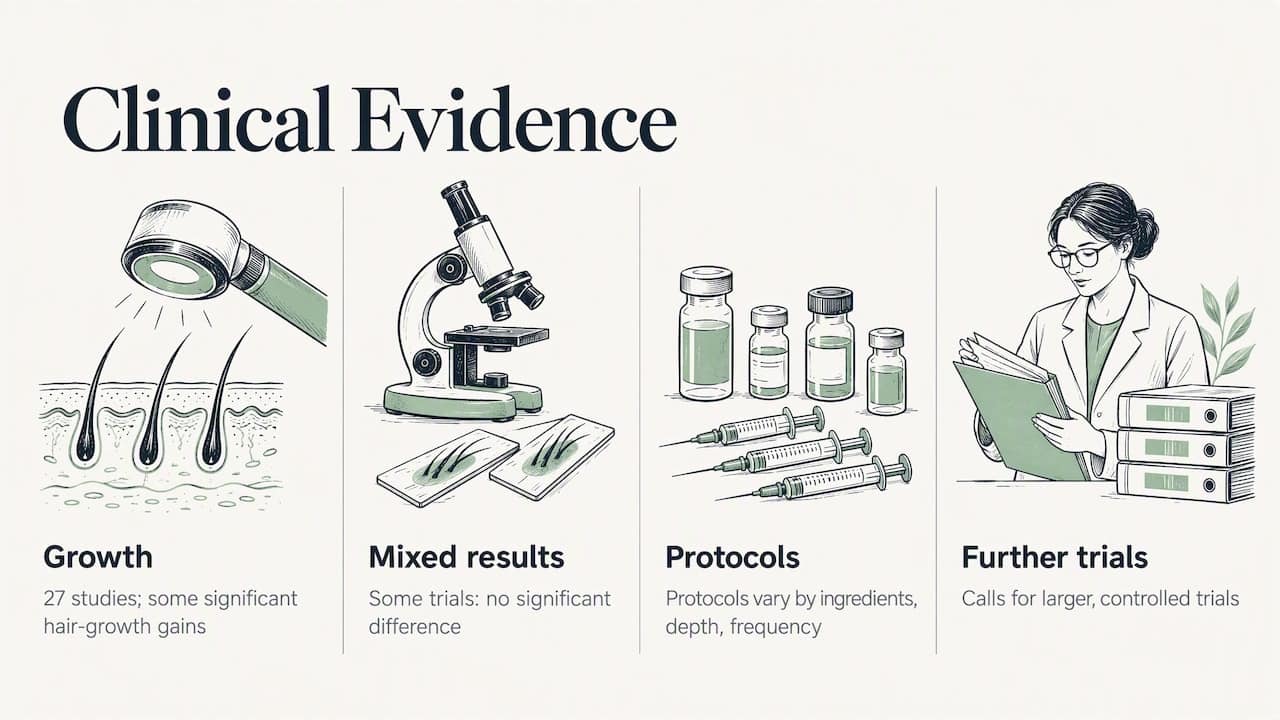
The strongest available evidence comes from a 2023 systematic review that analyzed 27 eligible studies on mesotherapy for hair loss. It found some trials reporting statistically significant improvements in hair growth, but it also flagged major protocol variability and called for larger, better-controlled trials before anyone could call the treatment reliably effective.
Most published trials on mesotherapy for hair loss are small, often following a limited number of patients for several months, which limits how confidently anyone can generalize the results. A small randomized trial comparing mesotherapy to topical minoxidil found that hair shaft diameter, an early marker of thicker, healthier regrowth, improved faster with mesotherapy in some measures, while other endpoints showed no meaningful difference between the two treatments. Clinicians often track this shaft-diameter change using dermoscopy, since it can show up before visible density changes do.
Other trials comparing mesotherapy against control groups have reported no significant difference at all, and the inconsistency largely traces back to the lack of a standard protocol. Different clinics inject different ingredients at different depths and frequencies, so comparing one study to another is often like comparing different treatments entirely.
The practical takeaway: mesotherapy shows modest potential for some patients, particularly on early markers like shaft diameter, but the evidence base is thinner and less consistent than what backs established drugs like minoxidil and finasteride.
Finasteride is FDA-indicated for men only. Women who are or may become pregnant must not handle crushed or broken finasteride tablets, due to the risk of harm to a male fetus. It can also cause sexual side effects (reduced libido, erectile dysfunction) in a minority of men, which usually resolve after stopping treatment. Discuss these risks with a physician before starting.
Safety, side effects, and how to reduce your risk
Mesotherapy is generally well tolerated, and most reactions are mild and short-lived. Expect some combination of the following after a session:
- Redness and mild swelling at injection sites, usually settling within a day or two.
- Temporary pain or tenderness across the treated scalp area.
- Transient shedding in the days following treatment, which can look alarming but is often part of the hair cycle resetting.
- Minor bruising, especially with manual injection technique.
Rare but more serious complications have been reported in case literature, including localized abscesses and granulomatous reactions tied to specific injected substances. These findings come from case series and reports rather than large trials, but they reinforce why sterility and provider qualification matter: a clinical review of mesotherapy’s safety profile documents this full range, from common transient irritation to the rarer inflammatory events.
Because mesotherapy cocktails are custom-mixed, pretreatment allergy screening matters more than it would with a single approved drug. A good provider also screens for active scalp inflammation or scarring disease before injecting anything.
Pro Tip: Ask any provider for a full ingredient list, their sterility protocol, and written aftercare instructions before you book a session.
Who’s a good candidate for mesotherapy
Mesotherapy tends to suit early androgenetic alopecia and telogen effluvium once any reversible triggers (stress, nutrient deficiency, thyroid issues) have been addressed. It is not appropriate for active scarring alopecias, where follicles may already be permanently damaged.
A proper clinical exam, including dermoscopy, helps confirm that enough viable follicles remain to make treatment worthwhile. The Mayo Clinic’s guidance on hair loss diagnosis and treatment stresses that catching androgenetic alopecia early, before extensive miniaturization, gives any treatment a better shot at visible results. Mesotherapy works best as an adjunct alongside these diagnosed, treatable cases rather than as a stand-alone fix, and like most hair treatments, it needs ongoing maintenance sessions to sustain any gains.
Before your first visit, it helps to have a few things ready:
- A summary of your medical history, including any autoimmune or skin conditions.
- A list of current medications and supplements, especially blood thinners.
- Recent lab work if your provider or physician has flagged a deficiency or thyroid concern.
What to expect: sessions, downtime, and cost
A typical appointment starts with a consultation and scalp assessment, moves into the injection session itself (usually 20 to 40 minutes), and wraps up with aftercare guidance. Here’s what that generally involves:
- Session counts in trials and clinics commonly involve several initial treatments spaced a few weeks apart.
- Maintenance sessions every one to three months are common once initial results appear.
- Downtime is minimal: most people return to normal activities the same day, though some redness or tenderness can linger for 24 to 48 hours.
- Washing the scalp gently and avoiding harsh styling products for the first day or two is standard aftercare advice.
Cost varies by clinic, ingredient selection, and region, so current prices should be confirmed directly on the provider’s site rather than relying on a single number. For specifics, our mesotherapy page lists current details for anyone considering treatment with us.
How mesotherapy compares with PRP and approved medications
Platelet-rich plasma (PRP) and approved drugs like minoxidil and finasteride currently carry a larger, more consistent evidence base than mesotherapy. A retrospective comparison of PRP and mesotherapy with growth factors found PRP associated with more reliably measurable improvements in trichoscopic density over six months, while mesotherapy results were more variable and tied closely to the specific formulation used.
A few practical differences stand out:
- PRP uses the patient’s own blood plasma, which sidesteps the allergy concerns that come with injected cocktails of mixed ingredients.
- Mesotherapy’s side-effect profile depends heavily on what’s in the syringe, so outcomes and risks shift from one clinic’s protocol to another.
- Both approaches require ongoing maintenance, similar to how discontinuing minoxidil or finasteride commonly leads to relapse, according to clinical guidance on androgenetic alopecia.
Combining approaches, when a provider thinks it’s appropriate, along with baseline photos and trichoscopy, gives you an actual way to measure whether treatment is working rather than guessing.
Our approach to mesotherapy at Nakota MediSpa
We start every mesotherapy case with a scalp assessment and a conversation about history, goals, and any conditions that would change the plan. Cocktails are built around what that assessment shows, not a one-size formula, and we follow up to track how the scalp responds over subsequent sessions.
To support results between visits, we point clients toward two products designed to complement in-clinic work:
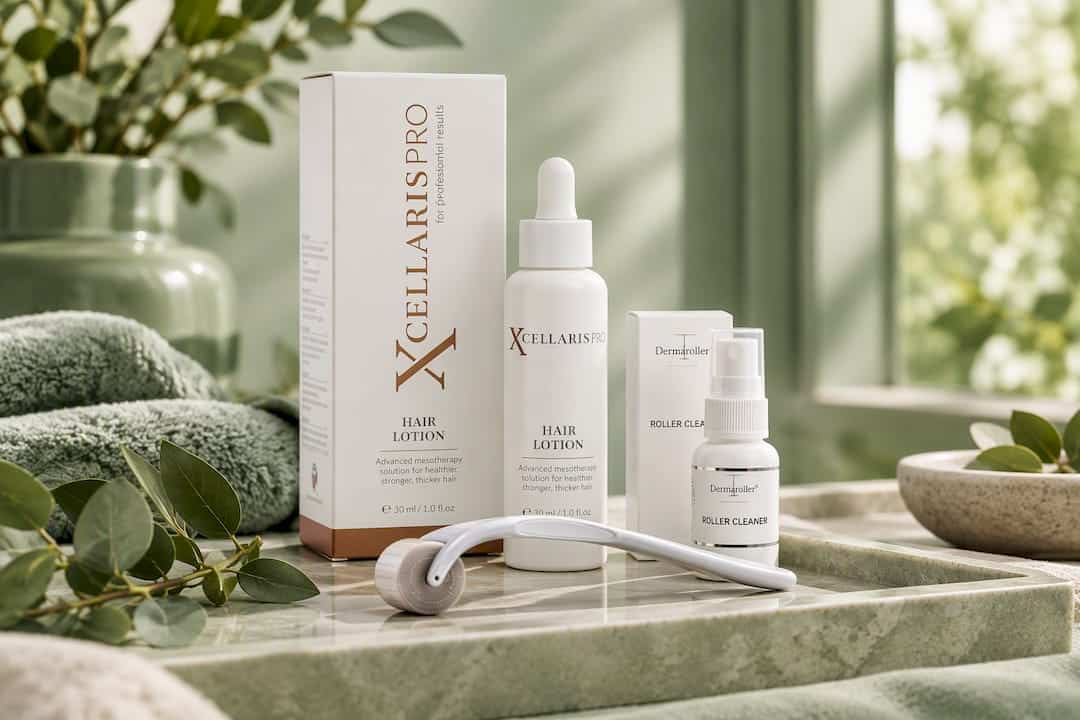
- The Xcellaris Pro Hair & Scalp Therapy Kit supports scalp health alongside in-clinic sessions.
- The Xcellaris Pro Hair & Scalp Therapy Lotion is meant for daily use to help maintain results between appointments.
We also offer combined microneedling and mesotherapy protocols for clients whose assessment points to that pairing.
Should you actually try mesotherapy?
Mesotherapy is worth considering if you’ve already confirmed your hair loss is reversible or early-stage androgenetic alopecia, and you want an adjunct alongside proven treatments rather than a replacement for them. It’s not worth considering as a first move before you’ve seen a dermatologist or trichologist for a real diagnosis.
Before booking, ask any provider three things: what’s actually in the cocktail and how they screen for allergies and sterility, how they’ll measure your results over time, and what the full session and maintenance plan will cost you.
— Andy
Ready to talk to a provider about mesotherapy
We offer mesotherapy as part of a personalized, home-based spa setting, built around a consultation first and a tailored plan second rather than a fixed package for everyone.
| What’s included | Detail |
|---|---|
| Initial consultation and scalp assessment | Included before any injections |
| Customized ingredient selection | Based on your scalp and history |
| At-home support options | Xcellaris Pro Kit and Lotion |
| Combined protocol option | Microneedling plus mesotherapy |
If you’re ready to look into pricing and availability, visit our mesotherapy service page or explore our hair re-growth and rejuvenation options to see how we can build a plan around your scalp.
This article is general information, not a substitute for advice from a qualified doctor. Consult a qualified healthcare professional about your own circumstances before acting on anything here.
FAQ
Is mesotherapy effective for hair loss?
Mesotherapy can help some patients, particularly with early markers like hair shaft diameter, but a 2023 systematic review found results vary widely depending on protocol and ingredient choice. It’s best viewed as a possible adjunct rather than a guaranteed solution.
Which is better, PRP or mesotherapy for hair?
PRP currently has a larger and more consistent evidence base, with a comparative study showing more reliable density improvements over six months than mesotherapy. Mesotherapy’s results vary more because formulations differ widely between providers.
What stage of hair loss is reversible?
Early androgenetic alopecia and telogen effluvium, once any underlying trigger is addressed, respond best to treatment because follicles are still viable. The Mayo Clinic notes that scarring alopecias often involve permanent follicle loss and don’t respond the same way.
What shampoo is best for hair loss?
There’s no single best shampoo for hair loss documented in clinical research; most benefit comes from active treatments like minoxidil, finasteride, or in-clinic therapies rather than shampoo alone. A gentle, sulfate-free formula paired with a provider-recommended daily product, such as our Xcellaris Pro Hair & Scalp Therapy Lotion, can support a broader treatment plan.
Sources
- Systematic review of mesotherapy: a novel avenue for the treatment of hair loss
- Efficacy of Platelet-Rich Plasma versus Mesotherapy with Recombinant Growth Factors and Stem Cell-Conditioned Media in Androgenetic Alopecia: A Retrospective Study
- Randomized trial comparing mesotherapy and topical minoxidil in male AGA (example study)
- Hair loss: Diagnosis and treatment — Mayo Clinic