
The most reliable melasma treatment is strict, year-round sun protection combined with prescription-strength lightening creams chosen with a doctor. Peels, microneedling and lasers are add-ons for stubborn cases, not cures. Melasma tends to come back, so the goal is control, not a one-time fix. Facials can still help with the sun damage that often sits alongside melasma, such as rough texture and dullness. They should never replace a proper diagnosis.
Below, we explain what causes melasma, how it is diagnosed, which treatments have the best evidence, what facial treatments can and cannot do, and when a skin change needs a doctor rather than a spa.
TL;DR
- Melasma is a common, recurrent pigment condition. Sun, visible light and hormones are the main triggers, so daily tinted or mineral sun protection is the foundation of any plan.
- First-line treatment is topical (hydroquinone, triple-combination cream, azelaic acid, kojic acid), prescribed and monitored by a doctor, because long unsupervised use carries risks.
- Peels, microneedling and lasers may complement topicals but carry a risk of rebound pigment, and results often fade within months after stopping.
- Sun-damaged skin (texture, fine lines, dullness) is a different goal from melasma and responds well to non-invasive treatments. New growths or changing moles need a medical assessment first.
Table of Contents
- What melasma is and what triggers it
- How melasma is diagnosed
- Melasma treatment options, from first line to last resort
- Peels, microneedling and lasers: complements, not cures
- What a facial can and cannot do
- How to build a sensible plan
- Our perspective
- Treatments and prices at Nakota MediSpa
- FAQ
- Sources
What melasma is and what triggers it
Melasma is an acquired pigment disorder that shows up as brown or grey-brown patches, most often on the cheeks, forehead and upper lip. A Canadian dermatology review describes it as common, mostly facial, and more frequent in Fitzpatrick skin phototypes III to VI, which means medium to deep skin tones.
The triggers overlap. MedlinePlus links melasma to estrogen and progesterone, pregnancy, oral contraceptives, hormone replacement therapy and sun exposure. A 2024 review adds that visible light, photosensitizing medicines and some cosmetics can aggravate it, and that the condition is persistent and prone to recurrence.
That last point sets the tone for everything below. If a clinic promises to “erase” melasma permanently, be sceptical.
How melasma is diagnosed
Diagnosis is usually clinical, meaning a trained professional looks at the skin. The American Academy of Dermatology says dermatologists commonly examine the face and neck, may use a Wood lamp or dermatoscope to judge how deep the pigment sits, and may take a biopsy when another condition needs to be ruled out.
Depth matters. Pigment that sits superficially responds better to treatment than pigment sitting deeper. The Merck Manual notes that peels or lasers work only when the pigment is sufficiently superficial, and that strict sun protection is required.
Patches that look like melasma can be something else: sun spots, post-inflammatory marks, or other pigment conditions. A family doctor can refer you to a dermatologist. Getting the label right comes before any spending on treatments.
Melasma treatment options, from first line to last resort
No single treatment is best for everyone. The AAD puts it plainly: the most effective approach combines sun protection with medication applied to the skin. Here is how the options usually stack up.
| Option | Role | Main limits |
|---|---|---|
| Broad-spectrum, tinted sun protection | Foundation of every plan | Needs daily, year-round use |
| Hydroquinone | Long considered a gold-standard lightening agent | Irritation; risks with prolonged unsupervised use |
| Triple-combination cream | Strong evidence for clearing | Not for continuous long-term use |
| Azelaic acid, kojic acid | Alternatives or add-ons | Can irritate; slower |
| Retinoids, cysteamine | Add-ons; cysteamine for mild to moderate cases | Slow; irritation |
| Chemical peels | Adjunct to topicals | Risk of rebound pigment |
| Microneedling | Adjunct in some protocols | Evidence still developing; risk of rebound pigment |
| Lasers and energy devices | Reserved for severe, non-responsive cases | Cost, side effects, relapse |
Sun and visible-light protection
This is not optional. A 2024 review recommends year-round broad-spectrum SPF 30 or higher, plus visible-light protection such as iron oxide, because tinted products may prevent flares better than UV-only filters. Look for a tinted mineral sunscreen.
Ottawa Public Health advises water-resistant, broad-spectrum SPF 30 or higher, applied generously and reapplied at least every two hours, with protection whenever the UV Index is 3 or higher. It also stresses that sunscreen is one part of a package: shade, clothing and a wide-brimmed hat reduce exposure more reliably than sunscreen alone. In an Ottawa winter, bright snow and a midday walk still count.
Prescription and topical treatments
A 2024 review in the American Journal of Clinical Dermatology describes hydroquinone as the gold standard, alongside retinoids and triple-combination therapy, with cysteamine as an option for mild to moderate melasma. A systematic review gives grade-A recommendations to hydroquinone, triple-combination creams, sunscreens, kojic acid and azelaic acid. The triple combination is 4% hydroquinone, 0.05% retinoic acid and 0.01% fluocinolone acetonide.
Timelines are slower than most people hope:
- Triple-combination improvement reaches its best point at around six weeks, after which maintenance is needed. Twice-weekly maintenance may postpone relapse.
- UK clinical guidance notes that 0.1% tretinoin may need more than 24 weeks to show benefit, and that azelaic acid 20% twice daily can help some patients but may irritate.
The safety side of topicals
Stronger is not better. Hydroquinone commonly causes irritation, and prolonged unsupervised use, especially beyond six months in people with skin of colour, risks exogenous ochronosis, a permanent darkening. Prolonged continuous use of triple-combination cream can cause visible small blood vessels and thinning of the skin. This is why we say these products belong under a doctor’s supervision, not in an online cart.
Peels, microneedling and lasers: complements, not cures
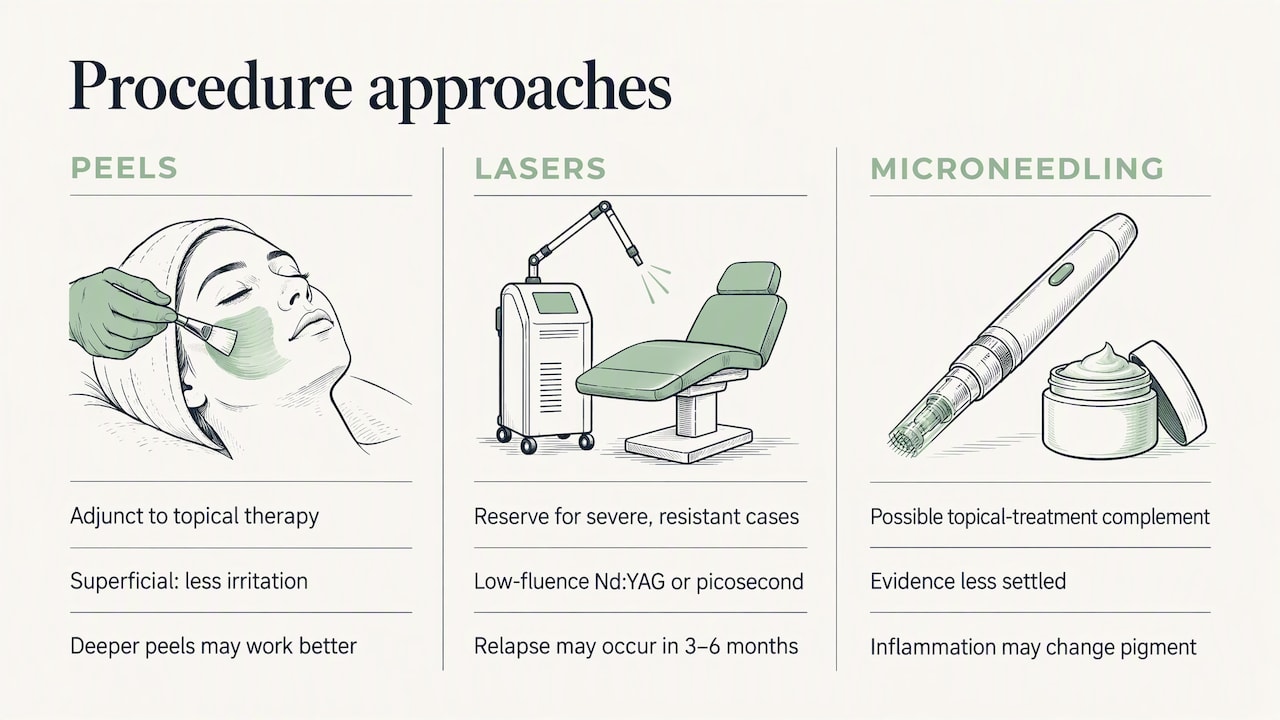
Procedures can speed up pigment clearance in more severe cases, but a 2024 review notes that recurrence and rebound pigment changes (darker or lighter patches) are real risks. Relapse after laser or light treatment may occur within three to six months, so procedures are better presented as relapse-prone than curative.
Chemical peels. Experts recommend peels as adjuncts rather than replacements for topical therapy. Deeper peels may work better, but superficial peels irritate less and may suit sensitive skin or skin of colour better. We compare peels with a hydro-oxygen facial in this guide to OxyGeneo versus a chemical peel.
Lasers and energy devices. The same review suggests reserving them for severe, non-responsive melasma because of cost, adverse effects and recurrence once treatment stops. If a laser is used, evidence favours low-fluence Q-switched Nd:YAG or picosecond approaches. Heat is a known melasma trigger, which is why aggressive settings backfire. Ask any provider about their experience with your skin tone before you agree.
Microneedling. Microneedling-based procedures are discussed as a possible complement to topical treatment. The evidence is less settled than for creams and sunscreen, and inflammation from the procedure can itself cause pigment changes. If melasma is your main concern, this is a conversation to have with your dermatologist first, not a standalone fix.
What a facial can and cannot do
Here is where we want to be straight with you. We are a non-invasive skincare spa, not a dermatology clinic. We do not diagnose melasma, and we do not claim a facial will clear it. Melasma needs a medical plan built on sun protection and prescribed topicals.
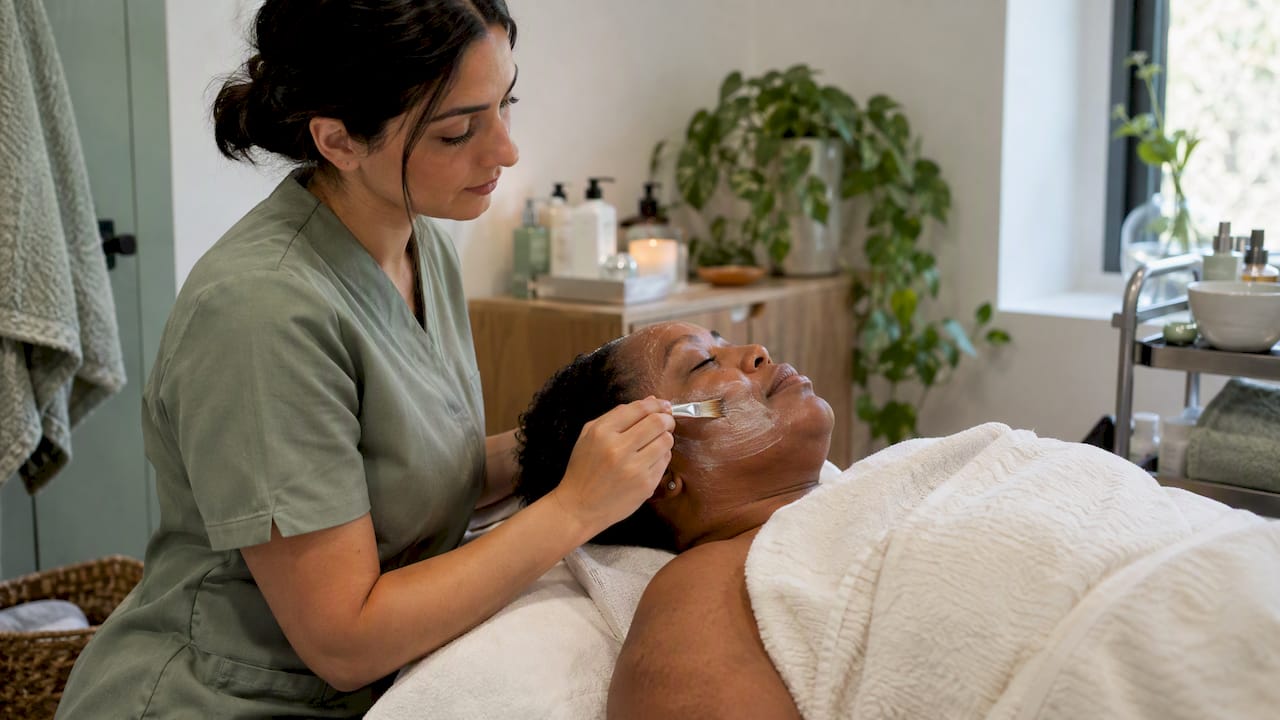
What a good facial can do is improve how skin looks and feels around that plan: texture, congestion, dullness, hydration and fine lines. For many of our clients in Ottawa and Barrhaven, that is the sun-damage side of the picture.
Sun-damaged skin is a different goal
Cleveland Clinic describes photoaging as premature aging caused mainly by cumulative UVA and UVB exposure, showing up as wrinkles, laxity, uneven pigmentation, visible small vessels and rough, scaly patches. Mayo Clinic adds that sun exposure can cause uneven pigmentation, sun spots, collagen and elastin breakdown, and yellowed skin.
Textural and tone concerns like these are where non-invasive treatments are most useful:
- Dullness and rough texture: our OxyGeneo facials combine exfoliation, oxygenation and infusion of active ingredients in one session.
- Laxity and early sagging: TriPollar skin tightening uses radiofrequency energy to firm the face, neck and eye area.
- Fine lines and uneven surface: collagen induction therapy stimulates the skin’s own repair response.
If you also have melasma, tell us at your consultation. We will keep treatments gentle, avoid anything that could trigger pigment, and suggest you check with your doctor or dermatologist before starting a new procedure. Anything heat-based deserves extra care on melasma-prone skin.
When to see a doctor first
Sun-damaged skin can include precancerous rough patches called actinic keratoses and carries a higher skin-cancer risk. Mayo Clinic advises seeking medical advice about a new growth, a changing mole, or a mole that bleeds, itches or hurts. Cleveland Clinic notes that a dermatologist examines sun-exposed skin and biopsies suspicious lesions.
See your family doctor or a dermatologist before any cosmetic treatment if you notice:
- A mole that has changed in size, shape or colour.
- A spot that bleeds, itches, hurts or does not heal.
- A rough, scaly patch that keeps returning.
- A dark patch that appeared suddenly or is not symmetrical.
The same applies to a skin tag or wart you want removed. We offer cosmetic removal of benign lesions, but anything that looks unusual should be assessed medically first.
How to build a sensible plan
This is the order we suggest to anyone dealing with facial pigment and sun damage.
- Get a diagnosis. Ask your doctor whether it is melasma, sun spots or something else.
- Lock in daily protection. Tinted mineral SPF 30 or higher, reapplied every two hours outdoors, plus a hat and shade.
- Start medical treatment if advised. Follow your prescriber’s schedule and check-ins, and do not extend prescription lightening creams on your own.
- Keep other skincare gentle. Irritation and heat can make pigment worse. Review fragrances and cosmetics with your doctor, since some can aggravate melasma.
- Add non-invasive treatments for texture and firmness. Choose them for the sun-damage goals above, with your doctor’s agreement if melasma is active.
- Plan for maintenance. Melasma has a high risk of recurrence, so protection and maintenance become routine rather than a phase.
Our perspective
People arrive at our home-based spa in Ottawa having tried everything, often frustrated that a product or peel made their patches darker. What we tell them is simple. Melasma is a medical condition that deserves a medical plan, and we would rather send you to a dermatologist than sell you something that will not help.
Where we can help is the rest of the skin. Many clients tell us they notice smoother texture and a fresher look after a series of treatments, and that is the reward of consistent, gentle, non-invasive care. We tailor each session to your skin, your tone and your history, and we are Health Canada licensed, which matters when you are choosing who touches your face. Ask us anything at your consultation, including what we will not do on melasma-prone skin.
— Andy
Treatments and prices at Nakota MediSpa
If your goal is smoother, firmer, more even-looking skin, these are the treatments most clients ask about for sun damage. Prices are as published on our site.
| Treatment | Price |
|---|---|
| Ultra OxyGeneo facial | $275 |
| TriPollar Lift, full face | $225 |
| TriPollar Ultra Lift, face and neck | $275 |
| TriPollar eye under-treatment or eyebrow lift | $100 |
| Collagen induction therapy / micro-needling | $350 |
We also offer mesotherapy for skin revitalization. Pricing for it is not published, so ask us for details. Not sure which fits? Book a personalized consultation through Nakota MediSpa and tell us about any diagnosis, medications or recent procedures, and we will recommend a plan.
FAQ
What is the most effective treatment for melasma?
There is no single best option. The strongest evidence supports daily sun protection combined with prescribed topical treatments such as hydroquinone, triple-combination cream, azelaic acid or kojic acid. Procedures like peels or lasers are usually reserved for cases that do not respond, and relapse is common.
Can a facial treat melasma?
A facial on its own is not a recognised treatment for melasma, and aggressive or heat-producing treatments can sometimes worsen pigment. Gentle facials can improve texture and hydration around a medical plan. Check with your doctor or dermatologist before starting any procedure if your melasma is active.
How long does melasma treatment take?
Expect weeks to months. Triple-combination cream tends to reach its best effect at around six weeks, while some topicals such as tretinoin can take more than 24 weeks. Maintenance is usually needed afterwards because melasma often returns.
What helps sun-damaged skin on the face?
Daily broad-spectrum SPF 30 or higher is the base, followed by treatments chosen for your concern, such as exfoliating facials, skin tightening or collagen induction for texture and firmness. A dermatologist should check any new growth, changing mole or rough scaly patch before you book a cosmetic treatment.
Sources
- Melasma: MedlinePlus Medical Encyclopedia
- Melasma: A Step-by-Step Approach Towards a Multimodal Treatment
- Melasma Management: How I Do It, Canadian Dermatology Today
- Melasma: Diagnosis and treatment, American Academy of Dermatology
- Melasma, Merck Manual Consumer Version
- An Update on New and Existing Treatments for the Management of Melasma
- Topical and Systemic Therapies in Melasma: A Systematic Review
- Melasma chloasma, Primary Care Dermatology Society
- Sun Safety and Tanning, Ottawa Public Health
- Sun-Damaged Skin: Photoaging, Signs, Causes and Treatment, Cleveland Clinic
- Sun damage, Mayo Clinic
